
The rupee plunged 90 paise to close at an all-time low of 80.86 (provisional) against the US dollar on Thursday after the US Federal Reserve's interest rate hike and its hawkish stance weighed on investor sentiments. Forex traders said the US Fed's rate hike and escalation of geopolitical risk in Ukraine sapped risk appetite. Moreover, the strength of the American currency in the overseas market, a muted trend in domestic equities, risk-off mood and firm crude oil prices weighed on the rupee.

The rupee has depreciated 2.35 per cent in the past three months and one per cent in the past month, despite strong capital flows and falling oil prices.

Sri Lanka on Tuesday deployed military personnel at State-run petrol pumps to monitor and manage fuel distribution amidst a shortage that led to serpentine queues of consumers outside filling stations.

RBI will take a cue from the Fed policy statement.
.jpg)
In the global market, the US dollar rose against the basket currencies in early trade as US President Barack Obama called for diplomacy in dealing with alleged chemical weapons attack in Syria but kept open the possibility of military action against the Assad regime.

The rupee gained for the second day, climbing 23 paise to a one-week high of 62.07 against the dollar on Wednesday, amid a modest recovery in local stocks and sales of the US currency by exporters and banks.

A fall in the dollar against major currencies and higher capital flows have pushed up the rupee against the greenback. "To the extent that RBI, with a view to reduce undue volatility, intervened in the foreign exchange market, such appreciation was moderated," he told Lok Sabha.

The latest macro-data from India is disquieting
.jpg)
The rupee is set to breach the Rs 60-a-dollar mark again this week as the Street expects foreign institutional investors to continue pulling out of domestic markets. According to the street, this would result in government bond yields rising.

NPA issues in the banking sector, standoffs in Parliament denting the reform momentum and limited space on the fiscal side are among the major concerns for investors.

The government was also faced with problems on its balance of payments. It took steps to conserve declining foreign exchange reserves, and began to regulate the production, supply and distribution of gold. It banned forward trading in the yellow metal in November 1962, and introduced gold bonds as well, reveals the RBI's annual report for the year ending June 1963.

The employment situation remains dire. Whatever can be done to promote greater low-skill employment should be pursued aggressively, advises former chief economic adviser Shankar Acharya.

Indian rupee, which earlier this week touched an all-time low, is likely to remain under pressure and may test new levels as a fallout of the US Federal Reserve indicating more interest rate hikes, experts said. The aggressive rate hikes will dampen demand and increase the possibility of a recession in the US. This could accelerate the pace of capital outflows, weaken the rupee and raise the threat of imported inflation.
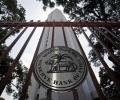
Central bank moves to infuse liquidity into bond market to help boost sentiment.

India's economy is in much better shape to weather tighter U.S. monetary policy.
RBI is expected to cut policy rates by 50 basis points by 2016.

India's foreign exchange reserves shot up to an all-time high of $339.99 billion.
'When the rupee was at 65 a dollar, we wanted to go to Thailand for a holiday.' 'Now at 72, we may find Goa much more attractive.' 'That's how correction happens.' 'If you don't let that correction happen, then it's a pressure cooker that bursts one day.'

Probably 35 bps. There could be even an encore in February 2023 to take the policy rate to 6.5% before the financial year ends, predicts Tamal Bandyopadhyay.

US interest rate normalisation policy is likely to keep global FX markets volatile.
Ahead of the Budget, Finance Minister Arun Jaitley on Tuesday underlined the need for tax reforms and quick decision making to ensure stability in policy regime.

The government has hiked gold import duty to 15 per cent from 10.75 per cent to check the current account deficit (CAD) and rising import of the yellow metal. The duty changes came into effect on June 30. Earlier, the basic customs duty on gold was 7.5 per cent, now it will be 12.5 per cent.

The government is likely to name a successor to Rajan sometime this month

After a a steep fall last week, the rupee has closed slightly stronger against the dollar.

'The prospects for both India and the global economy is that we are headed towards a very difficult time.' 'I see very uncertain at least 8-10 months for both India and the rest of the world.'

The proposed Rs 10,000 crore (Rs 100 billion) of bond purchase would be done on Monday.

Rupee rises by 16 paise against dollar on fresh selling.

'Today, there is no easy money to be made after the run-up in equities.'

After selling dollars for the past few months, the Reserve Bank of India (RBI) may take a hands-off approach before its annual account closing by not trying to prop up the rupee as geopolitical tensions show signs of stabilising with global crude oil prices easing from its $140 peak. The central bank was a net buyer of dollars between April and September, and then turned a net seller in the following months, the data released by the RBI showed. The RBI continued to be a net buyer of $36.6 billion in this fiscal year - between April and January. In 2020-21, it purchased $68 billion on a net basis.

On the Sensex chart, IndusInd Bank, SBI, Dr Reddy's, NTPC, ICICI Bank, HCL Tech and Bajaj FinServ emerged as major laggards.

The rupee depreciated 6 paise to 77.50 against the US dollar in the opening trade on Wednesday as a surging American currency in the overseas markets and persistent foreign fund outflows weighed on investor sentiment. Besides, rising global crude prices impacted the domestic unit, forex traders said. However, a higher opening in the domestic equity market restricted the rupee's fall, they added.

RBI would get the comfort of meeting its 8 per cent January Consumer Price Index-based inflation target, BofA-ML said, adding that 'we expect the RBI to cut 75 bp in 2015 from February with inflation on course to 6 per cent in January 2016'.

Forex dealers said besides robust month-end demand for the American currency from oil importers, dollar's strength against its rival currencies on expectations of rising interest rates amid lingering Sino-US trade tensions, weighed on the domestic currency.
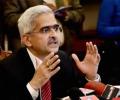
Many analysts over the past week have said the RBI has legroom to cut rates to the tune of 65 bps by June and some like Barclays and BofA have also spoken about the likelihood of an inter-meeting cut.

Tech Mahindra was the top gainer in the Sensex pack, rising around 2 per cent, followed by Bharti Airtel, Maruti, ICICI Bank, SBI, HDFC Bank, Asian Paints and Reliance Industries.

Not only is gold a hedge against currency depreciation, rising crude prices and uncertainty, it is up 7 per cent (in dollar terms) in the past 12 months, says Devangshu Datta.

The rupee appreciated by 37 paise to 62.12 against the dollar in early trade on Monday.

Direct investors should stagger their investments over 1-2 months.

'Our stable outlook currently points to the fact that the ratings are likely to remain stable for the next couple of years.'

The rupee on Monday slipped by 5 paise to close at 63.57 per dollar on fresh demand for the American currency from banks.
 © 2026 Rediff.com - Investor Information - Advertise with us - Disclaimer - Privacy Policy - Sitemap - Feedback - About us - Terms of use - Grievances